Le ‘relazioni pericolose’: la dialettica del monumento tra Ugo La Pietra e la Tendenza, 1973-1978
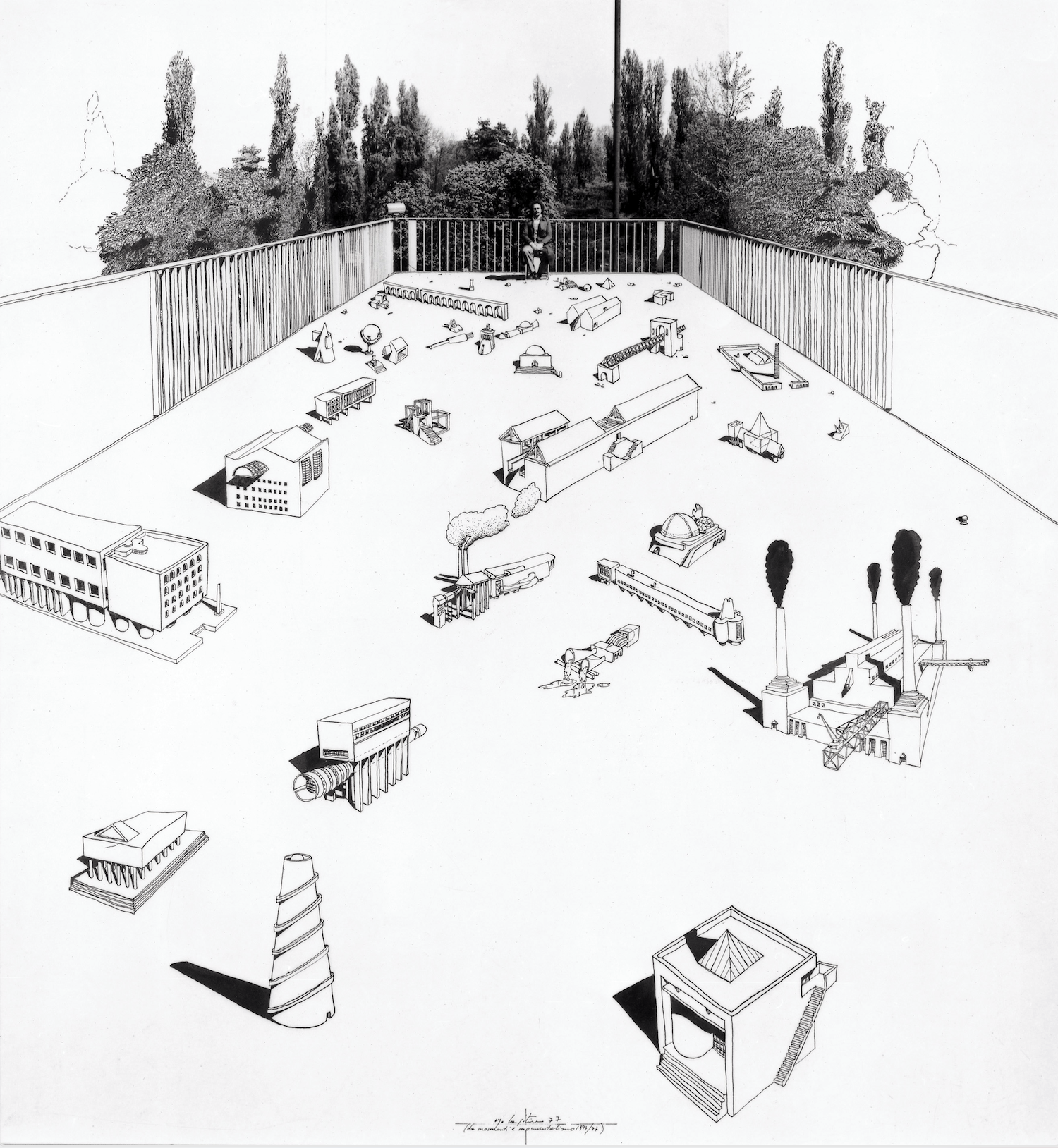
Ugo La Pietra, I miei balocchi (da monumenti e monumentalismo), 1973-77. Stampa litografica. Archivio Ugo La Pietra, Milano
In 1973, the 15th Milan triennale became the site of a cultural confrontation between the section curated by Aldo Rossi, featuring the so-called Tendenza, and that curated by Ettore Sottsass Jr., coordinated by Andrea Branzi and featuring the so-called Tadicals. At the center of this controversy was the concept of the monument and its translation into theory, drawing, and buildings. Through an analysis of films, photomontages, and graphic works combining photography and drawing, this article reconstructs the theoretical position of one of the protagonists of that confrontation: Ugo La Pietra. Produced between 1973 and 1978 and centered on Milanese ‘monumental’ architecture, these films, photomontages, and photo-drawings reveal why La Pietra turned his attention simultaneously to the monumental projects of Rossi and the Tendenza and to the peripheral or extra-urban plots occupied by inhabitants who had created vegetable gardens and residential blocks. Ultimately, these works bring into focus La Pietra’s own conception of the monument as anti-perennial, anti-grandiloquent, and anti-institutional form, thereby outlining the contours of a ‘counter-monument’ capable of opening new forms of freedom for living beings.


.png)
