Olivetti Firenze 1968-1972

Giulia Marino, Franz Graf, Giuseppe Galbiati, Olivetti Firenze, 1968-1972, Edizioni di Comunità, Rome, 2026
The first monograph devoted to the former Olivetti branch in Florence sheds light on one of the most remarkable examples of integration between architecture, engineering and design in postwar Italian culture. Designed between 1968 and 1972 by architect Alberto Galardi and engineer Silvano Zorzi, the building still stands today as an extraordinary work distinguished by its technical audacity, spatial quality and visionary approach.
Conceived during the years of Olivetti’s international expansion, under the leadership of Bruno Visentini, the Florence branch emerged from a precise challenge: inserting a radically modern architecture into the delicate historic fabric of the Tuscan city. The project was intended to embody, without compromise, the “Olivettian” identity: technological innovation, construction quality and attention to the well-being of working environments.
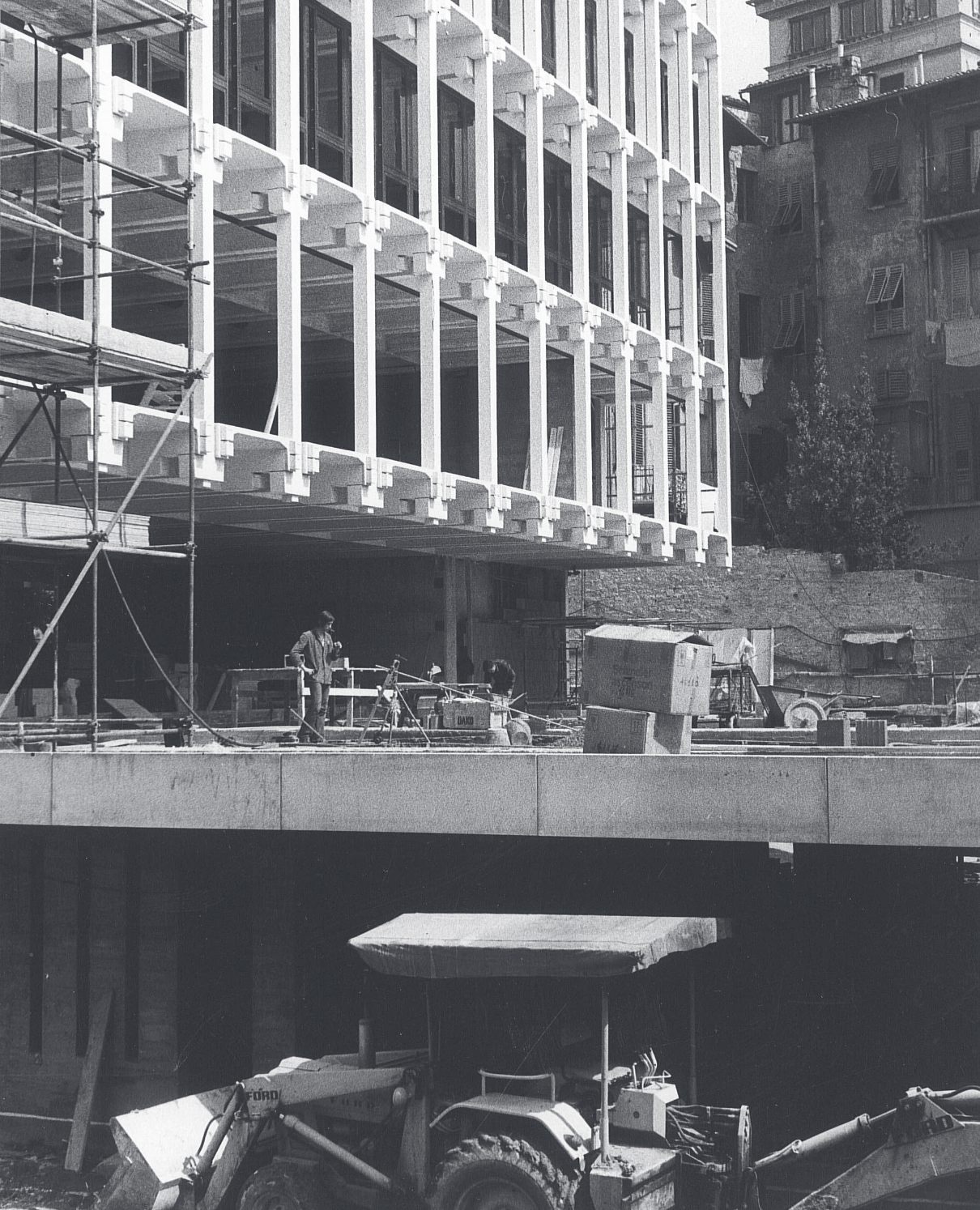
The monograph retraces the entire design and construction process of the building. At the core of the project lies the concept of the landscape office: continuous and flexible open-plan spaces, reflecting the most advanced research on workplace organization during the 1960s. To achieve this spatial freedom, Galardi and Zorzi developed an innovative structural system that redirects loads upward, overturning the conventional static scheme.
The result is a daring suspended “bridge-building,” supported by prefabricated prestressed concrete hangers and two box towers. Already celebrated by international critics at the time of its completion, the structure continues to impress through its elegance and technical precision. Materiality also plays a central role: the exposed concrete, made with white cement and white marble aggregates from Zandobbio — with Carrara marble initially considered for the mix — gives the building a luminous and refined presence in dialogue with Florence’s urban context.
The publication also explores the contribution of interior design by Ettore Sottsass Jr., who conceived the working spaces using furniture from the celebrated Synthesis 45 series together with collaborators from the Olivetti design studio, including Bruno Scagliola. The branch offices thus became an experimental laboratory in which space, furniture and technology converged to define a new vision of the workplace.
Through previously unpublished archival documents — including reportages by Gabriele Basilico, Gianni Berengo Gardin, Pino Abbrescia and Roberto Conte — alongside original drawings and critical essays, the monograph restores the significance of a work that remains relatively little known yet is fundamental to twentieth-century Italian design culture.
Giulia Marino, Franz Graf, Giuseppe Galbiati, Olivetti Firenze, 1968-1972, Edizioni di Comunità, Rome, 2026 ISBN 9791281778153
The volume includes a contribution by Jürg Conzett, as well as interviews with designer Alberto Galardi, Bruno Scagliola—who worked with Ettore Sottsass at the time—and Aurelio Muttoni, professor emeritus of engineering at the ÉPFLausanne.
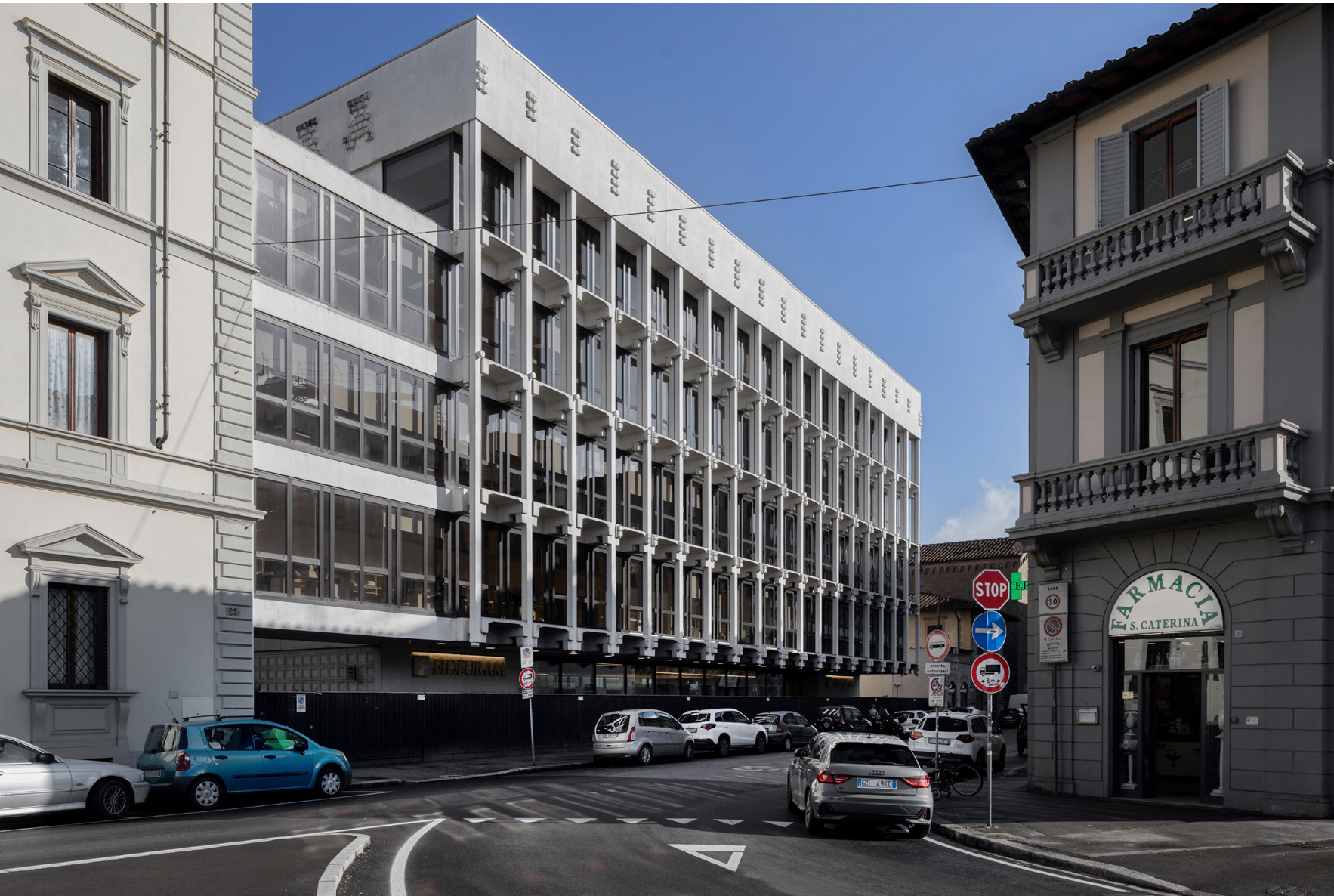
©Roberto Conte
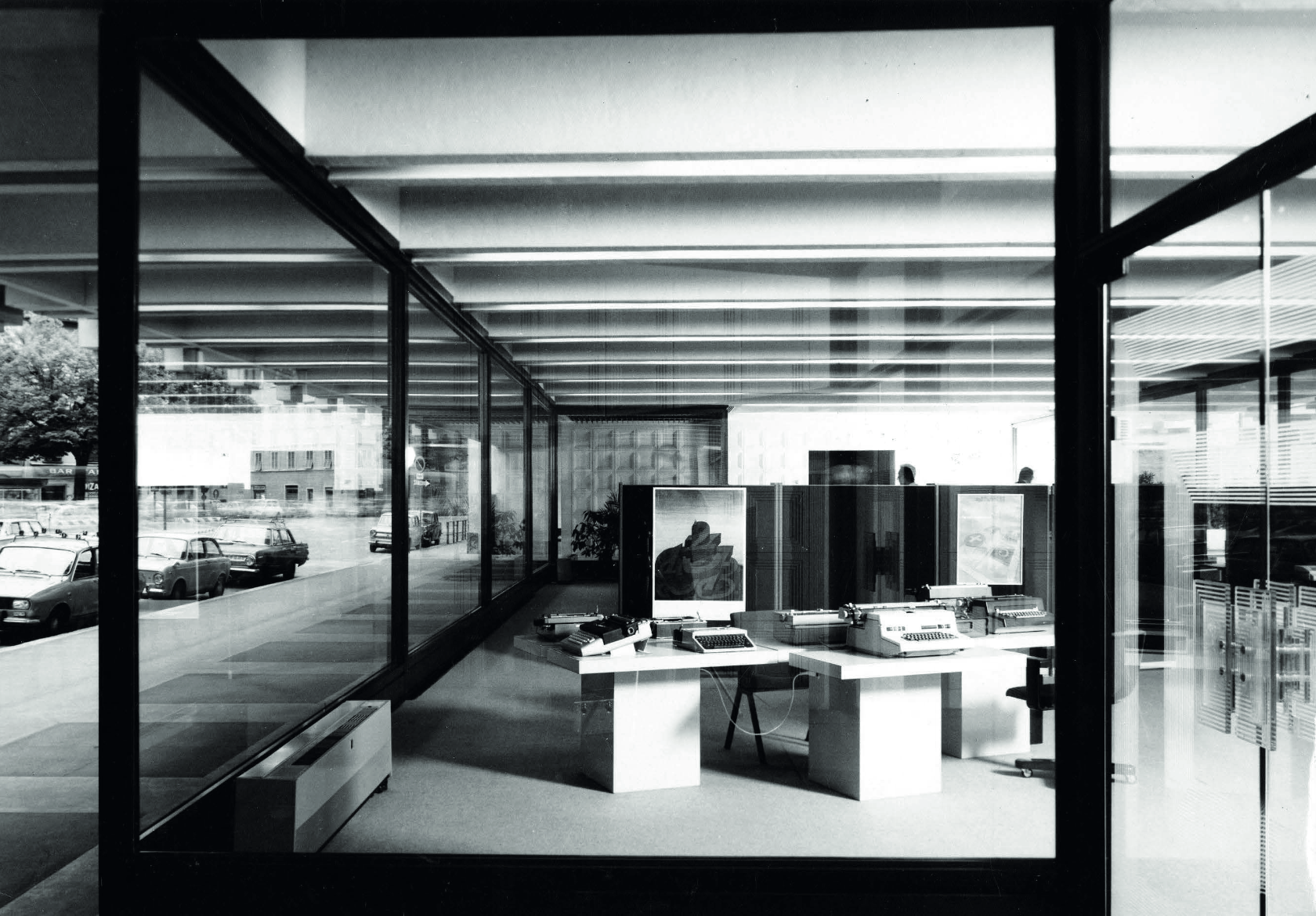
Associazione Archivio storico Olivetti © Pino Abbrescia


.png)
